Pub date: October 1, 2020
ISBN: 9787302565918
Rights: all foreign language rights available
132 p.p.
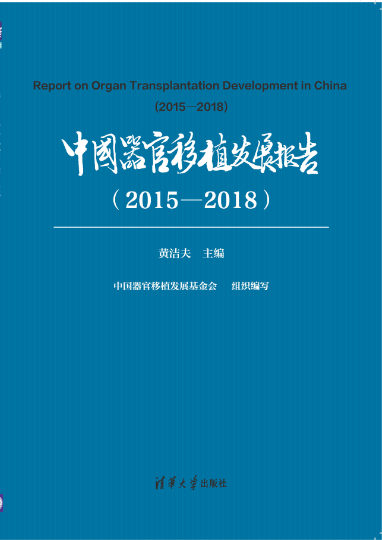
Report on Organ Transplantation Development in China (2015-2018) offers a comprehensive account of the evolution and major accomplishments of China's organ donation and transplantation system since 2015, detailing its shift from a judiciary-based framework to a voluntary, citizen-led model. It showcases the implementation of a fair, transparent, and traceable organ allocation mechanism built around the China Organ Transplant Response System (COTRS), along with advances across five critical domains: donation, procurement, transplantation, quality control, and oversight.
Furthermore, the report documents China's historic progress in establishing a legal and ethical framework for organ transplantation that aligns with international standards, demonstrating the country's unwavering commitment to fostering a donation culture while elevating both the quality and volume of transplant procedures. Backed by verified data and growing international acknowledgment, the report articulates what has come to be recognized as the "China Model" and "China Experience" in transplantation—offering substantive evidence and a actionable reference for strengthening China's role in global transplant discourse and its engagement in worldwide ethical governance.
Chapter 1 Organ Allocation and Sharing in China ………………… 51
1.1 Distribution of medical institations for organ donation and
transplantation ………………………………………………… 53
1.2 Organ donation ………………………………………………… 55
1.3 Patients waiting for organ transplantation …………………… 58
1.4 Utilization of organs …………………………………………… 60
1.5 Summary and prospects ……………………………………… 61
Chapter 2 Liver Transplantation in China …………………………… 63
2.1 Distribution of medical institutions for liver transplantation … 63
2.2 Data of liver transplant recipients ……………………………… 66
2.3 Quality and safety analysis of liver transplantation …………… 67
2.4 Summary and prospects ……………………………………… 71
Chapter 3 Kidney Transplantation in China ………………………… 74
3.1 Distribution of medical institutions for kidney transplantation 74
3.2 Data of kidney transplant recipients …………………………… 80
3.3 Quality and safety analysis of kidney transplantation ………… 81
3.4 Summary and prospects ……………………………………… 83
Chapter 4 Heart Transplantation in China ………………………… 86
4.1 Distribution of medical institutions for heart transplantation … 86
4.2 Data of heart donors and transplant recipients ………………… 88
4.3 Quality and safety analysis of heart transplantation …………… 91
4.4 Summary and prospects ……………………………………… 94 Chapter 5 Lung Transplantation in China …………………………… 96
5.1 Distribution of medical institutions for lung transplantation …… 96
5.2 Data of lung donors and transplant recipients ………………… 98
5.3 Quality and safety analysis of lung transplantation …………… 101
5.4 Summary and prospects ……………………………………… 104