






定价:62元
印次:1-1
ISBN:9787302153573
出版日期:2007.07.01
印刷日期:2007.07.13
图书责编:龙启铭
图书分类:教材
 电子书
电子书
 在线购买
在线购买
 分享
分享


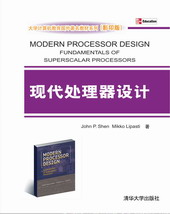
In addition to the comprehensive coverage within the book, a number of additional resources are available with Shen/Lipasti’s MODERN ROCESSOR DESIGN through the book’s website. Instructor Resources .Solutions Manual—A complete set of solutions for the chapter-ending homework problems are provided. PowerPoint Slides—Two sets of MS PowerPoint slides, from Carnegie Mellon University and the University of Wisconsin-Madison, can be down-loaded to supplement your lecture presentations. Figures—A complete set of figures from the book are available in eps format. These figures can be used to create your own presentations. Sample Homework Files—A set of homework nments with answers from Carnegie Mellon University are provided to supplement your own assignments. Sample Exams—A set of exams with answers from Carnegie Mellon Uni-versity are also provided to supplement your own exams. Links to www.simplescalar.com—We provide several links to the Simple-Scalar tool set, which are available free for non-commercial academic use.
This book emerged from the course Superscalar Processor Design, which has been taught at Carnegie Mellon University since 1995. Superscalar Processor Design is a mezzanine course targeting seniors and first-year graduate students. Quite a few of the more aggressive juniors have taken the course in the spring semester of their jun-ior year. The prerequisite to this course is the Introduction to Computer Architecture course. The objectives for the Superscalar Processor Design course include: (1) to teach modern processor design skills at the microarchitecture level of abstraction; (2) to cover current microarchitecture techniques for achieving high performance via the exploitation of instr...



1.1 The Evolution of Microprocessors 2
1.2 Instruction Set Processor Design 4
1.2.1 Digital Systems Design 4
1.2.2 Architecture, Implementation, and Realization 5
1.2.3 Instruction Set Architecture 6
1.2.4 Dynamic-Static Interface 8
1.3 Principles of Processor Performance 10
1.3.1 Processor Performance Equation 10
1.3.2 Processor Performance Optimizations 11
1.3.3 Performance Evaluation Method 13
1.4 Instruction-Level Parallel Processing 16
1.4.1 From Scalar to Superscalar 16
1.4.2 Limits of Instruction-Level Parallelism 24
1.4.3 Machines for Instruction-Level Parallelism 27
1.5 Summary 32
2 Pipelined Processors 39
2.1 Pipelining Funda... 查看详情
同系列产品
查看详情-
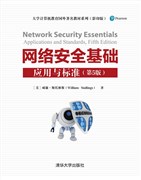
网络安全基础:应用与标准(第5版)
(美)威廉·斯托林斯(William Stallings) 著
ISBN:9787302519768
定 价:89元
-
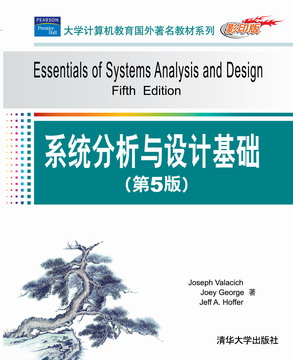
系统分析与设计基础(第5版)
Joseph Valacich, Joey George, Jeff A. Hoffer 著
ISBN:9787302312079
定 价:59元
-
计算机安全导论
Michael T. Goodrich Roberto Tamassia
ISBN:9787302307198
定 价:79元
-
操作系统:原理与设计——原理与设计
Pabitra Pal Choudhury
ISBN:9787302274896
定 价:59元
