On December 20, 2025, the 2025 Symposium on Infectious Medicine and Phage Therapy was successfully held in Beijing. Hosted by Tsinghua University Press (TUP), the event was co-organized by the academic journals Infectious Medicine and iLABMED.
Distinguished attendees included QIU Xianqing, Chairman of TUP; YU Xuejie, Professor at Wuhan University and Editor-in-Chief of Infectious Medicine; TONG Yigang, Dean of the School of Life Science and Technology at Beijing University of Chemical Technology; LIU Jie, Director of the Clinical Laboratory at the Seventh Medical Center of the PLA General Hospital and Executive Editor of iLABMED; WEI Qiang, Director of the National Pathogen Microorganism Resource Center, Chinese Center for Disease Control and Prevention (China CDC) and Editorial Board Member of Infectious Medicine; TANG Liuying, Researcher at the National Institute for Viral Disease Control and Prevention, China CDC and Associate Editor of Infectious Medicine; LI Ming, Researcher at the Institute of Microbiology, Chinese Academy of Sciences; LIU Jintao, Professor at the School of Basic Medical Sciences, Tsinghua University; ZHANG Rui, Deputy Director of the Department of Clinical Laboratory at Beijing ChaoYang Hospital; and ZHOU Xin, Researcher at the First Hospital of Hebei Medical University. The opening ceremony was moderated by SUN Yu, Associate General Editor of TUP and Director of the Editorial Offices for Infectious Medicine and iLABMED.
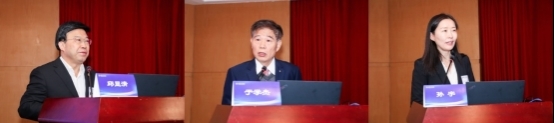
In the opening remarks, QIU Xianqing emphasized that the symposium closely aligns with national strategic needs by bringing together top experts and scholars in the field of infectious medicine and phage therapy. He noted that TUP remains committed to supporting academic innovation through high-level, internationalized academic publishing and knowledge services, thereby contributing to the Healthy China strategy.
YU Xuejie stated in his address that the symposium's themes are highly consistent with the core positioning of Infectious Medicine. He highlighted that the journal will continue to track disciplinary trends closely and facilitate the translation of high-quality research into practical applications through academic forums, driving innovation in both theory and technology.
The symposium featured a series of high-level keynote lectures from six leading experts:
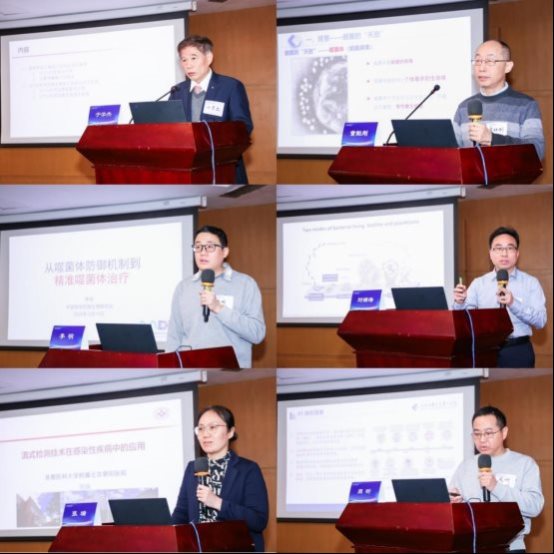
YU Xuejie delivered a report titled "Epidemiology and Host Immune Evasion of SFTSV."
TONG Yigang shared insights on "Engineering Modification of Phages Based on AI Structural Simulation to Enhance Targeting in Phage Therapy."
LI Ming presented on the transition "From Phage Defense Mechanisms to Precision Phage Therapy."
LIU Jintao explored the complexities of "Phage Resistance in Bacterial Biofilms."
ZHANG Rui discussed the "Application of Flow Cytometry Monitoring Technology in Infectious Diseases."
ZHOU Xin provided a report offering "New Perspectives and Strategies for Universal Influenza Vaccines."
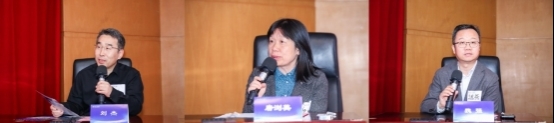
The keynote session was presided over by LIU Jie, TANG Liuying, and WEI Qiang, who jointly facilitated the academic discussions and technical exchanges.
This symposium provided a premier platform for exchange among professionals and made significant contributions toward overcoming traditional diagnostic bottlenecks and exploring precise, innovative solutions in infectious medicine.